To Create Is to Play
PixVerse Games Head Qiushi Chow Li shares how PixVerse R2 and the Game Engine turn real-time world generation into playable, evolving experiences.
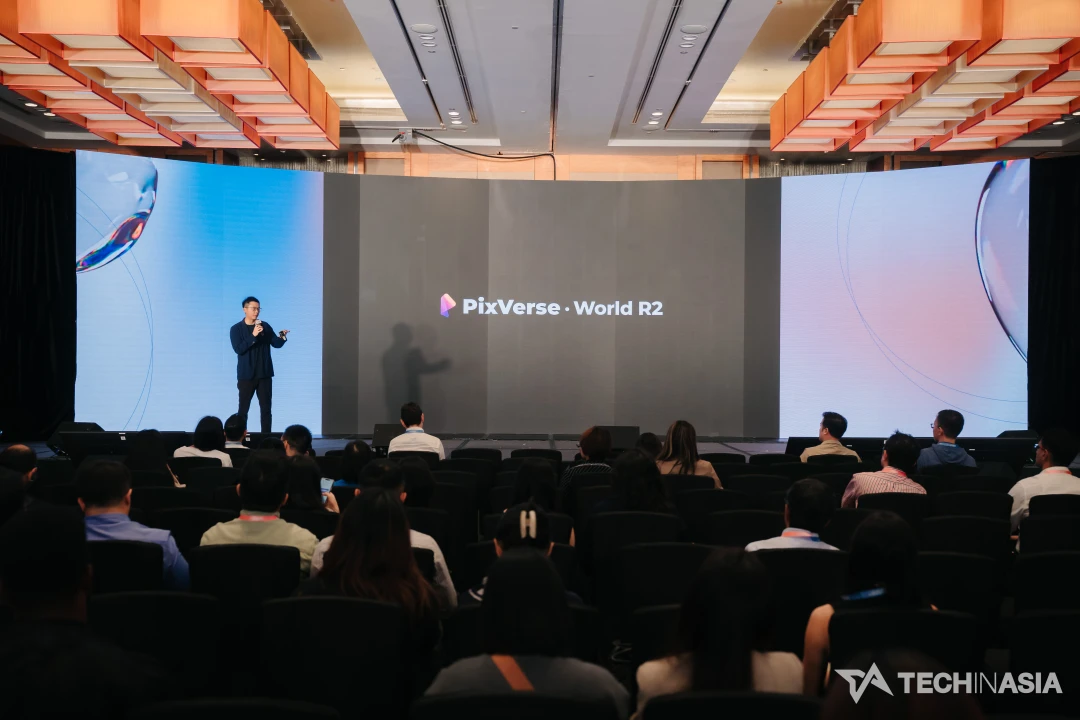
This September, Qiushi (Chow) Li, Head of PixVerse Games, took the stage at Tech in Asia Conference to reveal something the team has been working toward for a while: that real-time video generation can power the next generation of games. The talk landed the same week PixVerse launched R2, the next generation of its real-time world model.
Starting with a simple question
What actually makes a game a game? Rules, interaction, goals, feedback. Those four elements appear in Go, Tetris, and every multiplayer online battle arena (MOBA) ever made. The technology around them changes: the visuals, the input methods, the distribution model, but the core hasn’t.
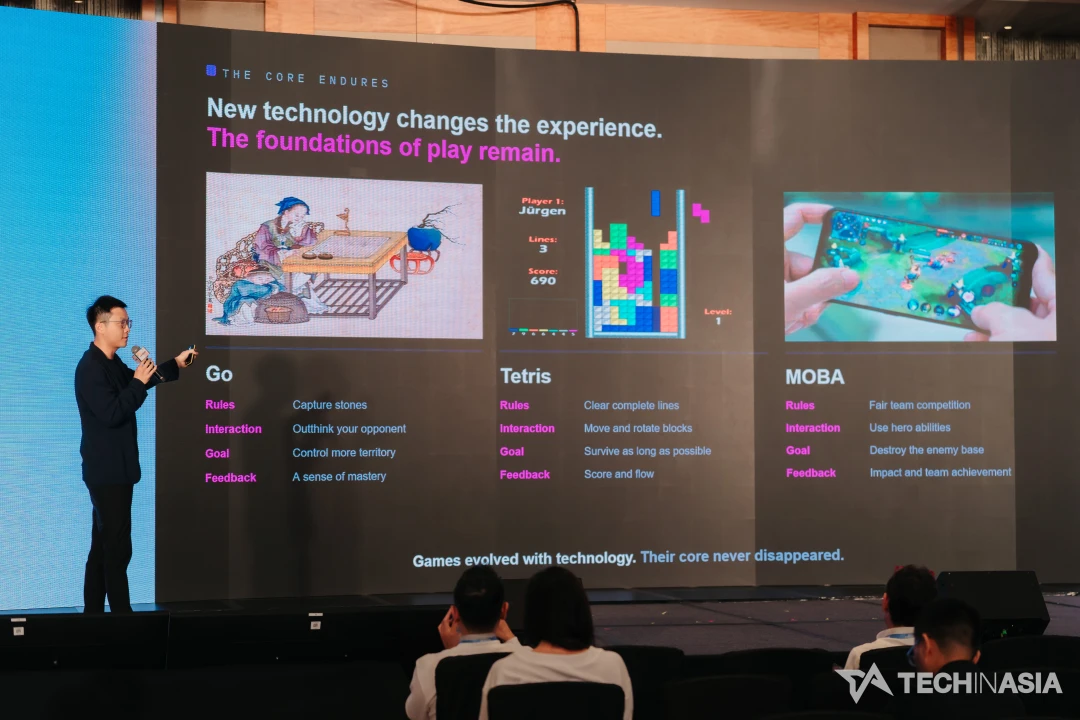
What AI changes
The talk’s argument is that AI is changing how games get made, how they reach players, and what playing one actually is.
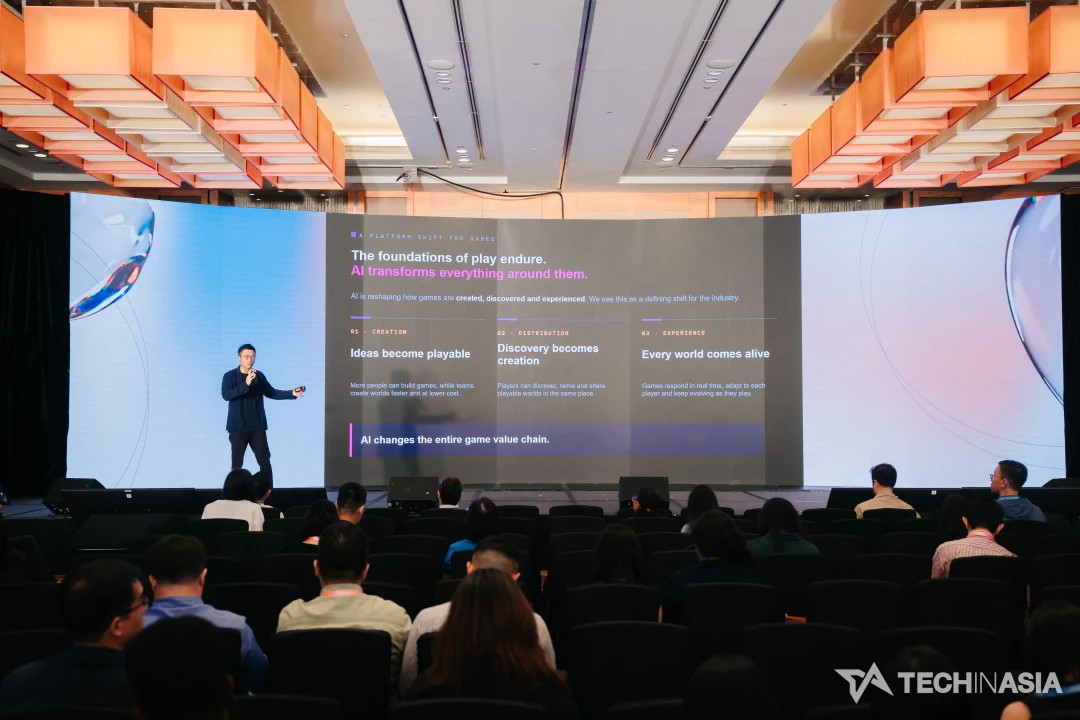
Chow shared three dimensions, each significant on its own:
On creation, historically, building a game required modeling, animation, sound design, and scripting before a single player could touch it. That prerequisite stack has meant that the people who could build games and the people who had ideas for them were not always the same people. The PixVerse Game Engine is designed to close that gap: a creator defines the rules and structure of an experience, and the model handles its expression as a generated world. The game takes shape as it’s being built.
On distribution, a generated world isn’t a fixed artifact passed from a studio to a player. It can be shared, entered, and shaped by more than one person at once. R1 demonstrated this: multiple users submitting prompts into a shared live feed, each prompt visible to everyone in it, each one shaping what the world does next.
On experience, R2 changes what a session is. In both conventional video generation and earlier real-time generation, input affects the current moment and then passes. In R2, what happens earlier in a session stays true later: a player’s choices carry forward, shaping how characters behave, how situations resolve, how the environment develops. Each decision leaves a mark.
Together these shifts compound. A world that can be generated, entered by multiple people, and remembered across time isn’t just a better game. It’s a different thing.
Our definition: to create is to play
In an AI-native game, the pieces that traditionally made a game (characters, worlds, the choices a player makes) stop being fixed assets built in advance. They’re generated in response to what the player does.
With PixVerse Game, a player picks a genre, defines a world and characters in natural language, and the engine builds the world from there.
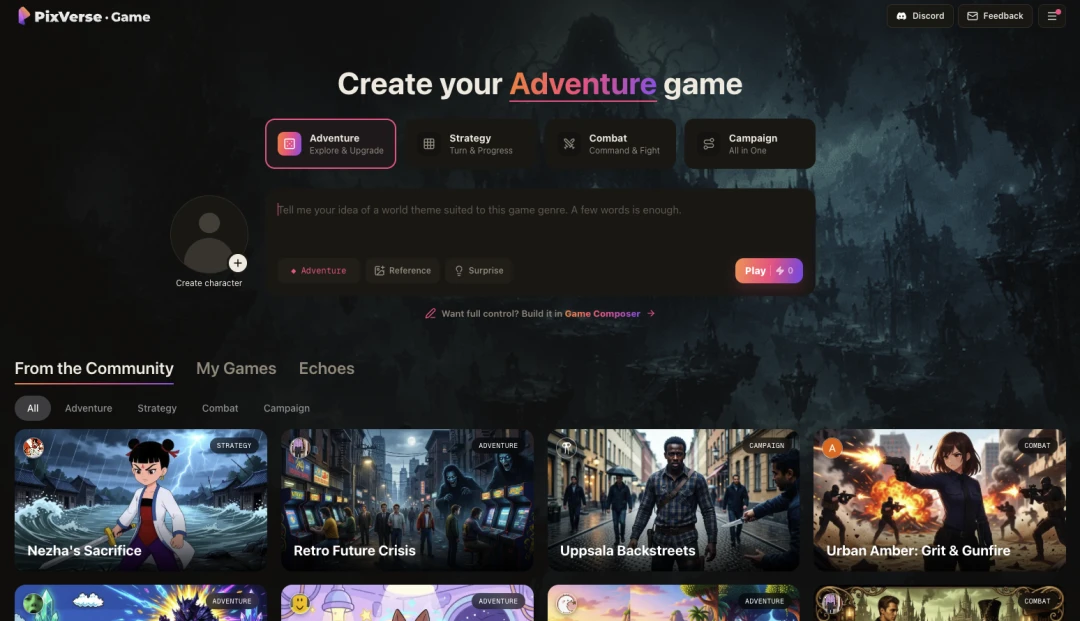
The experience in-game takes shape through play rather than being authored ahead of it. For example, in one session, a player encounters a non-player character (NPC) mid-game and types what they want to offer it — a dragon or a leaf. The NPC’s response and the storyline branch from that choice.
It also changes what it means to create. The Game Engine removes the dependency on modeling, animation, and scripting as prerequisites. A creator defines the rules; the engine expresses them as a generated world. They see it take shape in real time, adjust it, and discover what it is through the process of building it.
To create is already to play.
Where we are now
R1 launched in January 2026. Three months later, R1 gained shared worlds and personalized avatars. In July, PixVerse launched the Game Engine on top of R1.
This month, R2 launched. The focus of R2 is scaling: more data, more input types, longer sessions, still running in real time. Creators have already been building on the beta: branching games, interactive stories, characters who hold memory across an entire conversation.
Try it yourself
PixVerse Game, now running on R2, is fully accessible at game.pixverse.ai.
A collection of worlds built on R2 is open to explore at world.pixverse.video. The architecture behind how R2 maintains coherence across longer sessions is covered in the full R2 announcement.