AI Football Ad Generator: Prompts and Templates for 2026
Use an AI football ad generator to create product-first World Cup-style videos, watch-party ads, fan-zone clips, local match promos, and social ads.

An AI football ad generator is only as useful as the prompt you give it. “Make a football ad” usually gives you a stadium, cheering fans, slow motion, and a product that feels pasted into the scene. A stronger prompt starts with the product, the football moment, the buyer benefit, the platform format, and the rights limits.
This guide is an AI football ad generator prompt library for football, soccer, and World Cup-style product ads. Use the templates with your preferred AI video ad generator, then adapt the product details, scene, captions, audio, and aspect ratio for TikTok, Reels, Shorts, YouTube, ecommerce pages, or paid social.
The examples below cover watch-party products, fan-zone accessories, local match gear, personal care, and sports content tools. Each prompt avoids real teams, player likenesses, official tournament marks, and broadcast footage so the ad can feel football-native without becoming a rights problem.
AI Football Ad Generator Prompt Templates
Use these as starting points. Replace the bracketed fields with your product, selling points, target platform, and brand tone.
1. Match-Night Watch Party Product Ad
Best for projectors, TVs, speakers, snacks, drinks, streaming accessories, home decor, and fan products.
Create a [9:16 / 16:9 / 1:1] football watch-party product ad for [product name].
Use the uploaded product image as the hero product reference.
Scene: a realistic apartment or living room before kickoff. Friends arrive with snacks and drinks. The product makes match night feel bigger, clearer, louder, easier, or more exciting.
Product benefits to show: [benefit 1], [benefit 2], [benefit 3].
Camera style: [handheld social ad / polished commercial / cinematic push-in / fast TikTok hook].
Audio: distant crowd ambience, room tone, product sound cue, natural cheers.
Captions: short benefit captions only, such as “[caption 1]”, “[caption 2]”, “[caption 3]”.
End frame: clean product hero shot with CTA “[CTA]”.
Do not use real teams, real players, official tournament logos, broadcast footage, club crests, national badges, or readable third-party brand marks.
Keep the product shape, label, color, scale, and materials consistent.
2. Fan-Zone or World Cup-Style Travel Product Ad
Best for earbuds, translation devices, travel products, portable chargers, bags, cameras, creator gear, and fan accessories.
Create a vertical football fan-zone product ad for [product name].
Use the uploaded product image as the product reference.
Scene: a busy night street near a generic stadium or fan zone. Fictional fans wear original non-branded shirts. The main character uses the product to solve one match-night problem: [translation / battery / comfort / capture / navigation / connection].
Story beats:
0-3s: show the fan-zone energy and the problem.
3-6s: show the product being used clearly.
6-10s: show the benefit in a natural football moment.
10-15s: end on product hero shot and CTA “[CTA]”.
Audio: crowd ambience, chant rhythm, street noise, subtle product sound.
Text: keep captions short and leave safe space for mobile UI.
Avoid real flags, official event marks, real player faces, broadcast graphics, and recognizable club or national team designs.
3. Local Match Highlight Product Ad
Best for sports cameras, wearables, training apps, fitness gear, boots, bags, recovery products, and youth sports products.
Create a football product ad showing a local match becoming a highlight reel.
Product: [product name].
Main benefit: [auto-tracking / training feedback / comfort / durability / better recording / faster recovery].
Scene: a real local football pitch with simple floodlights, parents near the touchline, original kits, muddy grass or natural turf, and grounded camera movement.
Start with the product in the real environment.
Show one clear football action: sprint, pass, save, shot, celebration, or training drill.
Keep the product visible early and return to it in the final frame.
Tone: energetic but realistic, not a professional broadcast.
Captions: “[benefit caption]”, “[proof caption]”, “[CTA]”.
Rights limits: no real clubs, league branding, player likenesses, official graphics, or scoreboard replicas.
4. Sideline Pressure Product Ad
Best for deodorant, apparel, hydration, towels, grip products, tape, skincare, and match-day personal care.
Create a short football sideline product ad for [product name].
Use the uploaded product image as the visual reference.
Scene: changing room, sideline bench, or local pitch under floodlights. The product appears naturally before or after a hard run.
Show effort through breath, sweat, fabric movement, boots on turf, and a reset before play resumes.
Product promise: keep it limited to [freshness / confidence / comfort / readiness / grip / hydration].
Do not suggest medical treatment, guaranteed performance, injury prevention, or unrealistic athletic results.
Audio: product click, fabric rustle, footsteps, whistle, crowd ambience.
End frame: product close-up with CTA “[CTA]”.
5. Compact Product Image to Football Ad Prompt
Use this compact version when an AI ad generator asks for product name, selling points, and a short ad brief instead of a long cinematic prompt.
Product name: [product name]
Selling points: [selling point 1], [selling point 2], [selling point 3]
Target audience: [fans / parents / creators / athletes / travelers / ecommerce shoppers]
Ad concept: create a [9:16 / 16:9 / 1:1] football-themed product ad where [product] helps with [specific football moment].
Scene: [watch party / fan zone / local match / training session / sideline / sports bar].
Style: original, realistic, rights-safe, product-first, social-ad pacing.
CTA: [CTA]
Avoid: real teams, players, official marks, broadcast footage, copied jerseys, national badges, and unverifiable product claims.
What Makes a Football Ad Work?
A football ad works when the product has a reason to be there. A drink in a fan zone, a projector in a living room, earbuds in a global crowd, a sports camera at a local pitch, or deodorant on the sideline before play resumes all make sense. A random product floating over a stadium usually does not.
Before opening any AI video ad generator, decide what the viewer should feel and what the product changes in the scene.
Product relevance comes first. The product should belong naturally in a football, fan, training, or match-night moment.
Cultural fit matters just as much. Football has its own rituals: chants, nerves, rivalry, rain, floodlights, late goals, and shared watching. Those details make an ad feel like it was made by someone who understands the sport.
Motion and sound carry the energy. Sprinting, shooting, cheering, tracking shots, screen light, whistles, footsteps, crowd noise, and product sounds can sell the scene before the viewer reads any caption.
Format shapes the edit. A 16:9 film spot, a 9:16 social hook, and a 1:1 feed ad need different framing and pacing.
The cultural part is easy to miss. Recent TechRadar commentary on World Cup marketing criticized campaigns that feel detached from football culture. That is the warning sign: if the ad could swap football for any other sport without changing the story, the concept is too thin. The same applies to visual style. As another TechRadar piece on AI ads notes, polished output can still become forgettable when brands lose strategy and originality.
How to Use These Templates in PixVerse
For football spots that begin with a fan chant or an artist track, Vibe MV gives you an audio-led route into the visual concept. Once the cut is approved, the Sound Effect Generator can help add synced whistles, crowd ambience, or product foley to the finished clip.
If you want to run these templates in PixVerse, choose the workflow based on how much control the ad needs. Most merchants already have product photos, packaging shots, ecommerce images, or product URLs. Use those as the source asset, then decide whether the job is a fast product ad or a more directed cinematic scene.
Use PixVerse Ad Master when the prompt is product-first: product image, product name, selling points, captions, music, and ad structure. Use PixVerse V6 when the ad needs a directed 15-second scene with product setup, fan reaction, product close-up, audio, captions, and CTA. Choose Seedance 2.0 when reference consistency and native audio matter across crowd, bar, or watch-party scenes. Choose Kling O3 for action around a moving ball, product tracking, or reference-to-video control. Choose HappyHorse 1.0 when tension, room tone, product clicks, and crowd audio carry the idea.
For a promotional cut, continue with promo mix. After the main version is approved, use Video Expand only when you need to reframe the finished clip for another platform. It is a resizing and expansion step, not a separate creative model for the same ad.
Case 1: Smart Projector Ad - “Turn Your Living Room into a Stadium”
A smart projector is the most natural football product case because the product benefit is the scene. The viewer does not need an abstract metaphor. The product makes match night bigger.
This case fits home theater brands, electronics sellers, watch-party products, and retailers selling during major tournaments. It can be cut as a 16:9 YouTube pre-roll, a 9:16 Reels or Shorts ad, and a 1:1 Meta feed asset.
Recommended model: PixVerse V6
Use PixVerse V6 for this case because the ad needs one coherent 15-second social spot: product setup, room transformation, fan reaction, product close-up, and CTA. The story is not mainly about extreme physics or reference-heavy character control. It is about clean product visibility, match-night atmosphere, audio, and pacing.
The PixVerse V6 docs list text-to-video, image-to-video, transition, extension, and reference-to-video support, with 1-15 second duration and multiple quality settings. For this ad, start in 9:16 if the main channel is TikTok, Reels, or Shorts. Generate a separate 16:9 version for YouTube rather than cropping the vertical version.
Use the product photo as the visual anchor. In the prompt, describe the ordinary living room, the projection turning into a stadium-like screen, the friends reacting, the sound cues, and the final product hero shot. Before publishing, review the product shape, lens, label area, room continuity, and whether the stadium effect still feels like a projection rather than a random fantasy transition.
Prompt for this case
Image model: Image 2
Video model: PixVerse V6
Aspect ratio: 9:16 or 16:9
Inputs: Product image, product selling points, match-night room concept
Prompt difficulty and tips: The hard part is scale and projection logic. If the projector is not described as a tabletop device, the model may make it too large or turn it into a ceiling light, speaker, or sci-fi object. Keep the projector about the size of a compact home projector, placed on a coffee table, and describe the wall effect as a projected screen rather than a portal or open stadium.
Original product image
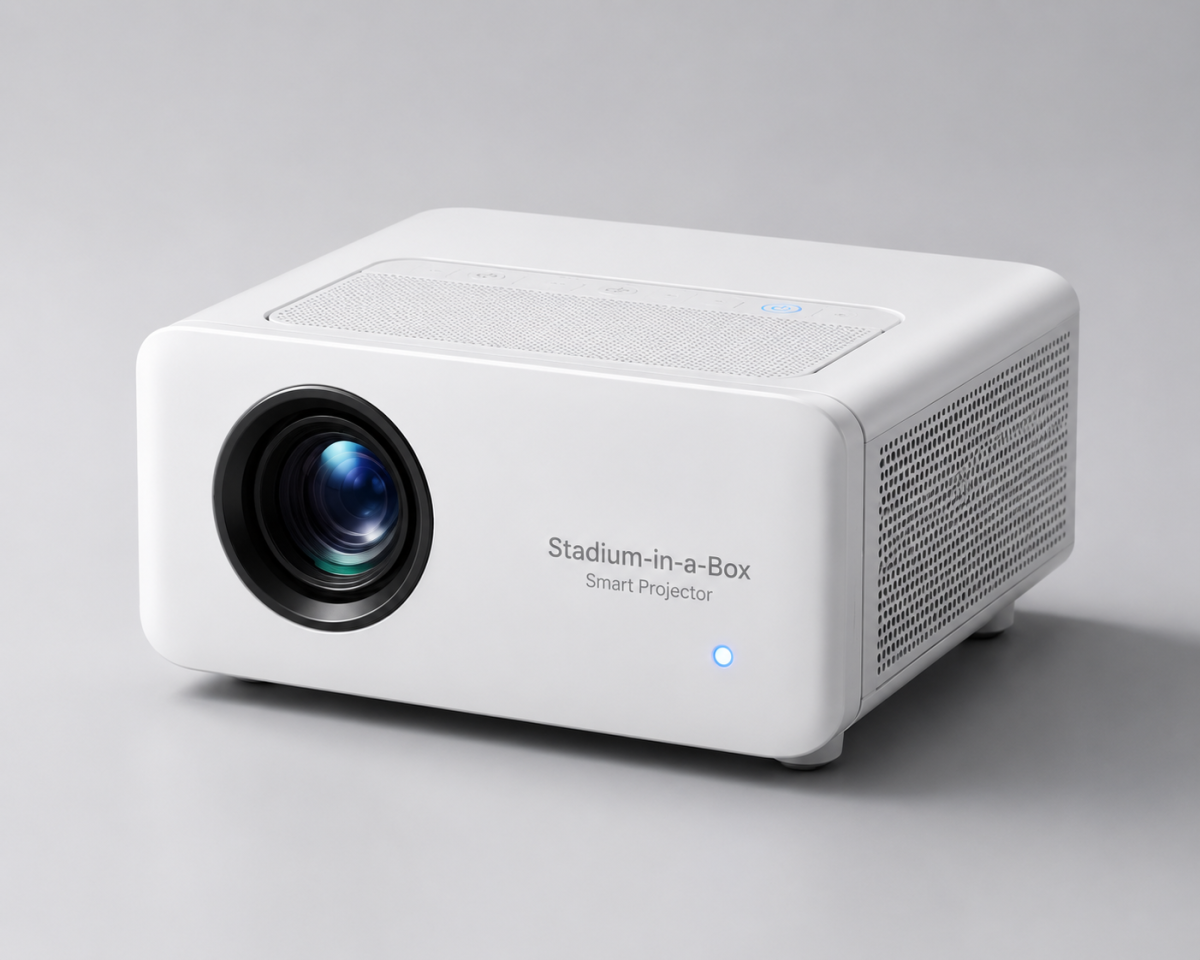
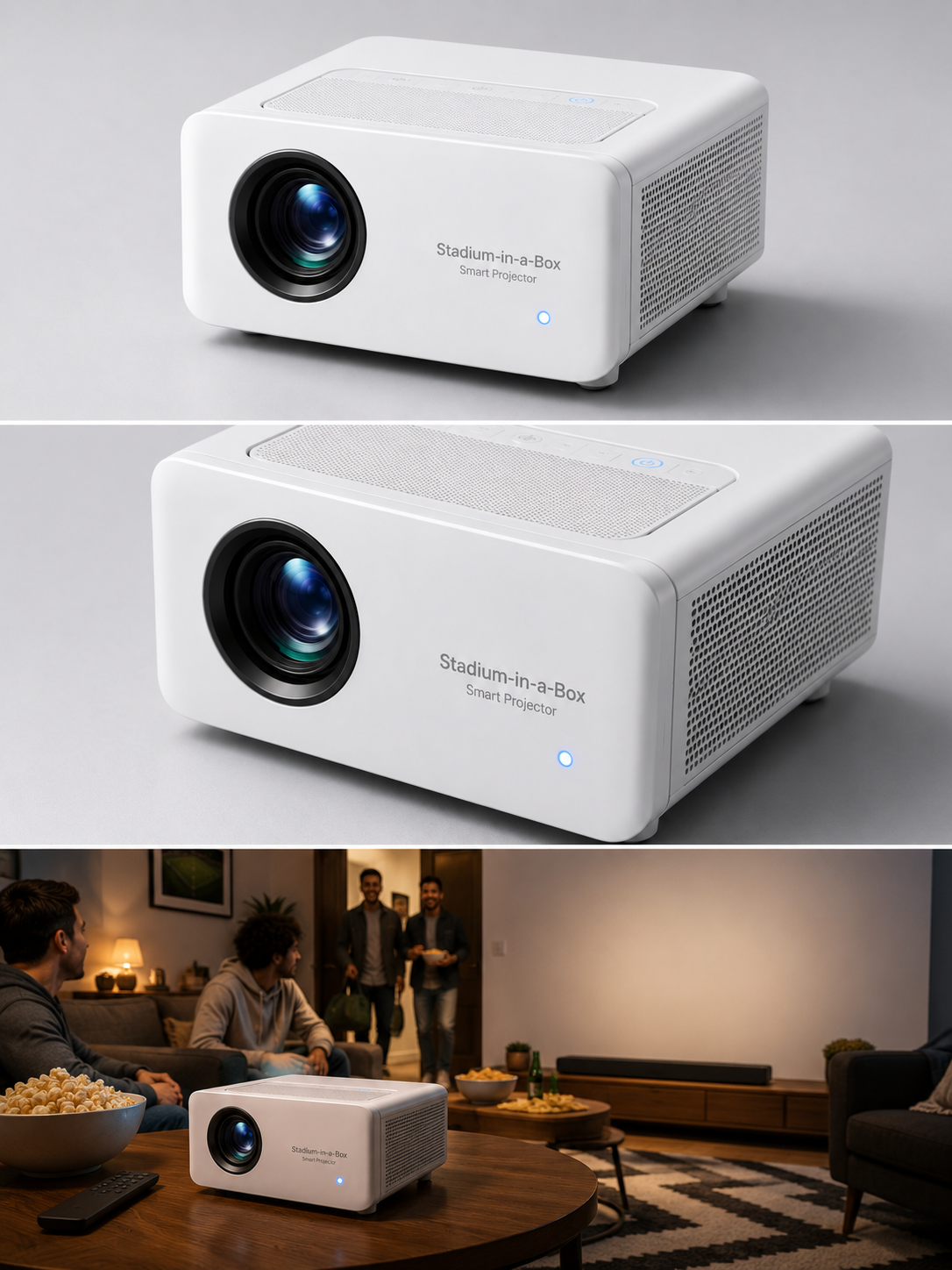
Image 2 reference board
Video result
Image prompt: product angle and room reference board
Use the uploaded smart projector product photo as the source image. Create a clean three-panel reference board for a football watch-party ad. Panel 1: a polished ecommerce hero shot of the projector on a neutral surface. Panel 2: a 45-degree close-up that shows the lens, buttons, vents, label area, and material finish clearly. Panel 3: a cinematic living-room key visual with the same projector on a coffee table, a blank wall ready for projection, soft match-night light, snacks, and friends entering the room. Keep the exact projector shape, proportions, lens position, color, label, buttons, vents, and finish. Do not redesign the product, add new logos, change the label, show real match footage, add official football marks, or place the product in a stadium.
Video prompt
Use the uploaded smart projector product photo and the Image 2 reference board as visual references. Create a 15-second cinematic football watch-party ad. Keep the projector body, lens, blue power light, and label consistent in every shot.
0-3 seconds: Open in a dim modern apartment living room before kickoff. The projector sits on a coffee table in the foreground. Friends enter the room with snacks and drinks. Use a slow handheld push-in toward the product. Add a soft room tone and distant crowd ambience.
3-6 seconds: The projector turns on with a subtle chime. A bright beam hits the blank wall. The wall becomes a huge stadium-like screen with green pitch light, moving crowd shadows, and soft floodlight reflections across the sofa. Keep the effect believable as a projection, not a fantasy portal.
6-10 seconds: Cut between the lens close-up, the wall-sized match-night screen, and friends reacting naturally. Add short captions: “Big-screen match night,” “Built-in sound,” “Quick setup.” Keep the projector visible in at least one wide shot.
10-13 seconds: A fictional goal moment happens off screen. The crowd sound rises. Friends cheer, snacks shake slightly, and the room glows with stadium light. Do not show real players, official broadcast footage, team crests, flags, or scoreboard graphics.
13-15 seconds: End on a clean product hero shot with the projected stadium glow behind it. Add the CTA: “Make match night bigger.” Keep the product sharp, centered, and readable.
Case 2: AI Translator Earbuds - “Understand Every Chant”
AI translator earbuds fit football because major tournaments bring people, languages, songs, and street interviews into one space. The product does not need to borrow a real team or player. The use case is already global.
This ad works best in 9:16. It can feel like a fan POV story: a traveler hears chants in a crowded square, puts in the earbuds, and suddenly understands the mood around them.
Why this product fits football
The ad should not claim that the earbuds understand every dialect or every stadium chant unless the product can prove it. Keep the promise simple: live translation helps fans follow conversations, interviews, and match-night moments while traveling.
The football scene can move between a street outside a stadium, a sports bar, and a living-room watch party. Use fictional shirts, abstract flags, and original jersey designs. The viewer should feel a global tournament atmosphere without seeing protected marks.
Recommended model: Seedance 2.0 Standard
Seedance 2.0 Standard is the best fit for this case because the ad depends on reference consistency and native audio. The product has to stay recognizable, while the scene moves between a city square, sports bar, and watch party. Seedance 2.0 supports image references and 4-15 second clips, which suits a compact social ad built around sound and translation.
Keep the edit simple: confusion, product use, understanding, shared celebration, product hero. Audio review matters because the product promise depends on sound. Check crowd noise, chant fragments, translated captions, and the final product shot together.
The 15-second structure can move from a traveler hearing an unfamiliar chant, to putting in the earbuds, to translated captions appearing, to multiple fan settings, and finally to the product hero shot. Before publishing, make sure the translation claim matches the real product. Avoid fake flags, shirts, or visual motifs that sit too close to protected national or club identities.
Prompt for this case
Image model: Image 2
Video model: Seedance 2.0 Standard
Aspect ratio: 9:16
Inputs: Earbud product image, fan-zone scene, sports bar scene
Prompt difficulty and tips: Earbuds are easy to distort because they are small and often close to faces, hands, hair, and captions. Spell out the scale: each earbud should be small enough to sit naturally in the ear, and the charging case should fit in one hand. Leave clear space for translated captions, or the text effect may cover the product or crowd.
Original product image
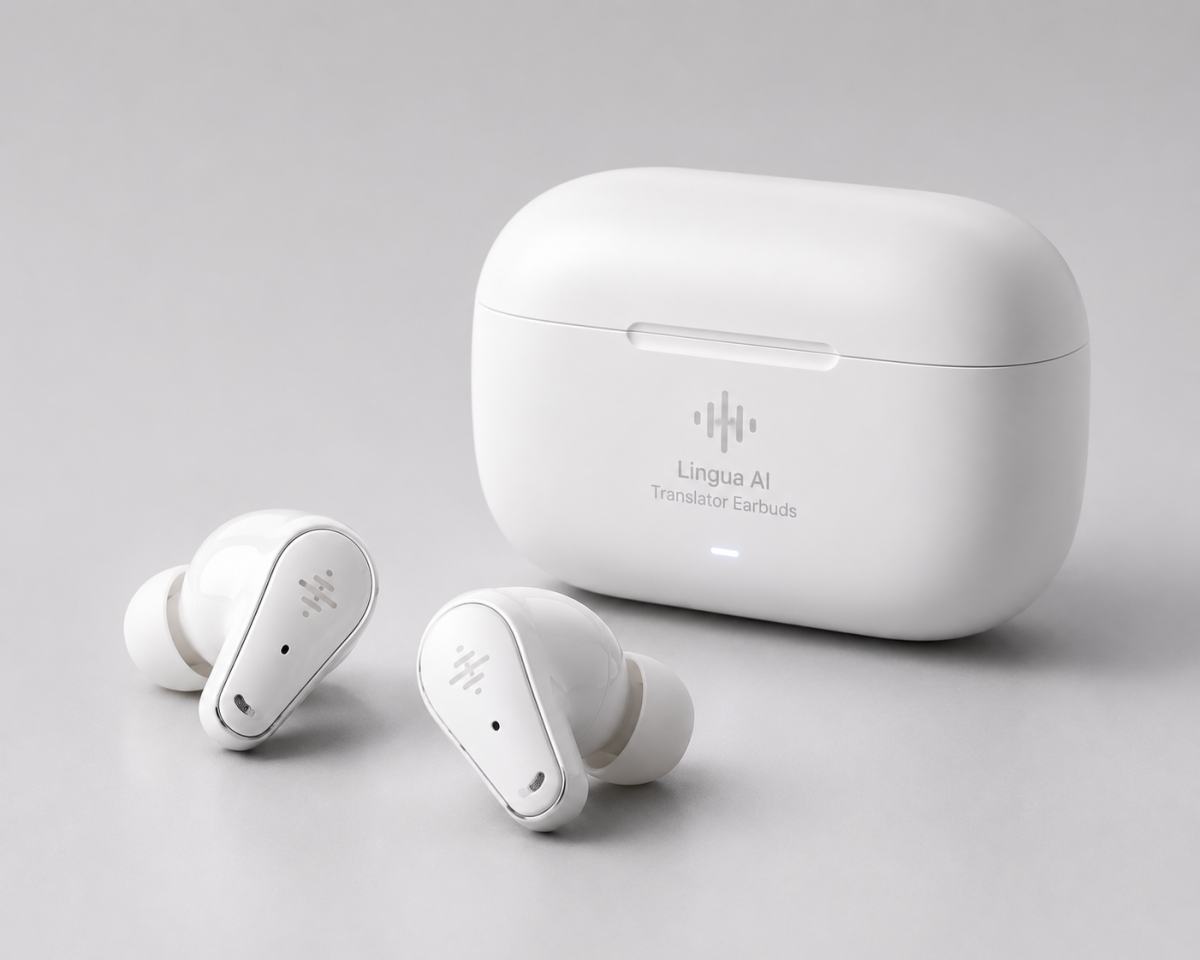
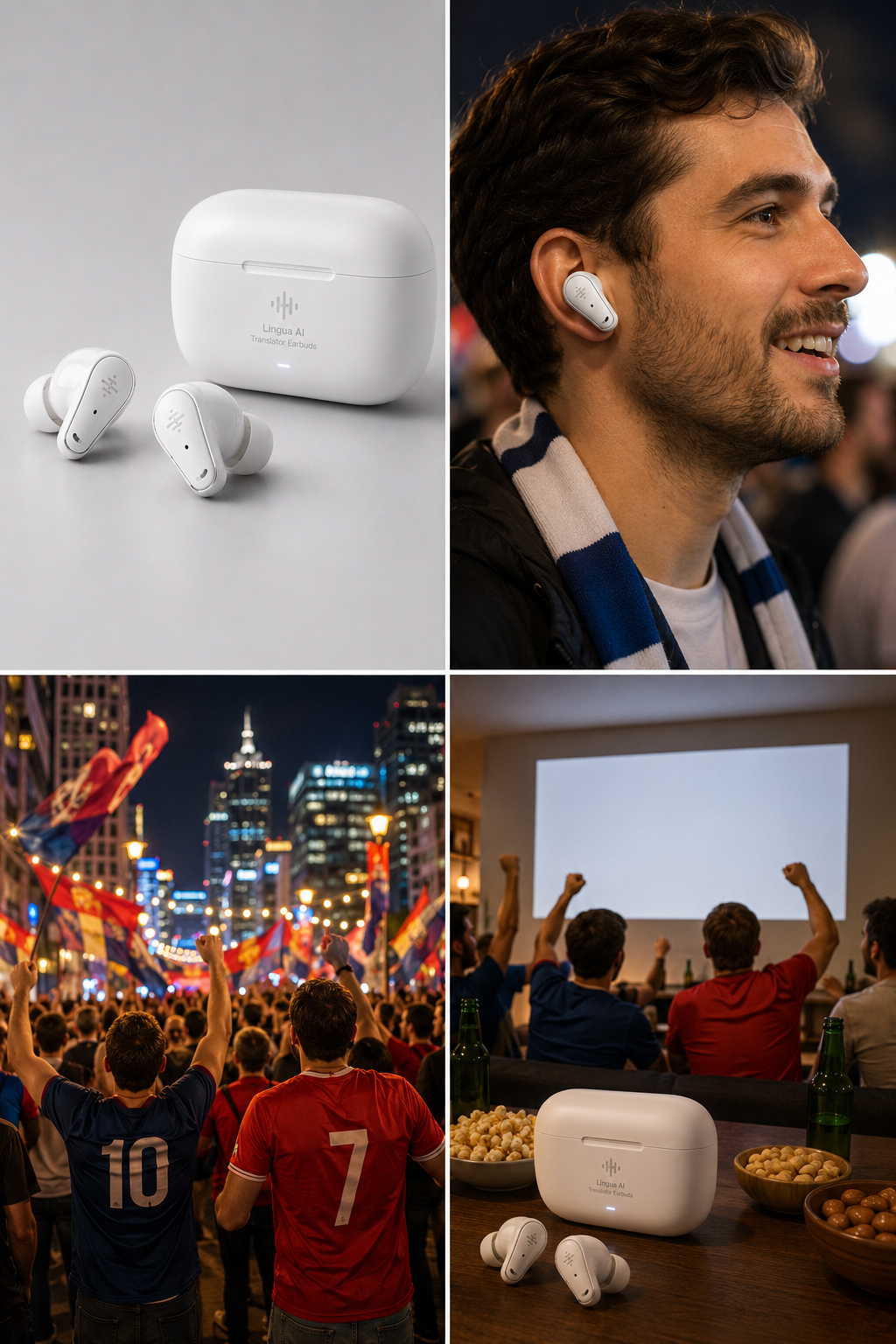
Image 2 reference board
Video result
Image prompt: product and fan-scene reference board
Use the uploaded AI translator earbuds product photo as the source image. Create a four-panel reference board for a vertical football fan ad. Panel 1: a clean premium ecommerce shot of the earbuds and charging case. Panel 2: an ear-level lifestyle close-up with one earbud worn by a traveler, keeping the product shape accurate. Panel 3: a night city fan-zone key visual with fictional shirts, abstract flags, warm street lights, and a lively crowd. Panel 4: a sports-bar or living-room watch-party scene with short translated caption space left clear on screen. Keep the exact earbud shape, charging case shape, color, microphone holes, LED details, logo or label placement, and proportions. Do not redesign the earbuds, invent new labels, use real team logos, national badges, player faces, or official tournament marks.
Video prompt
Use the uploaded earbud product photo and the Image 2 reference board as visual references. Create a 15-second vertical football fan ad about understanding match-night chants while traveling. Keep the earbud shape, charging case, color, and product details consistent.
0-3 seconds: Open in a busy city square at night. A traveler stands among football fans wearing original non-branded jerseys. The crowd is chanting in a language the traveler does not understand. Use handheld documentary-style camera movement, warm street lights, and layered crowd sound.
3-6 seconds: Cut to a close-up as the traveler opens the charging case and puts in the earbuds. Add a soft pairing tone. Colored sound waves move from the crowd toward the earbuds, then become clean translated captions near the traveler.
6-10 seconds: Cut through three quick scenes: street fan zone, sports bar, and living-room watch party. In each scene, the earbuds help the traveler follow a chant, a fan comment, or a short match reaction. Keep captions brief and natural.
10-13 seconds: A goal happens off screen. Different languages in the crowd resolve into one shared cheer. Use rising crowd audio, a whistle, and natural laughter. Keep the product visible in a close-up or ear-level shot.
13-15 seconds: End on the earbuds and charging case as the crowd blurs behind them. Add the CTA: “Follow every chant.” Do not use real team logos, national badges, official tournament marks, real player faces, or broadcast footage.
Case 3: AI Sports Camera - “Turn Your Local Game into a Cinematic Highlight”
This case shifts the ad away from watching elite football and toward making your own football moments look better. That is useful for youth teams, local clubs, schools, training centers, and parents who record weekend matches.
The product is an AI auto-tracking sports camera. The core promise is simple: place the camera near the pitch, and the match becomes a highlight reel.
Why this case adds real value
Many football ads show professional players in impossible stadiums. This case feels closer to the buyer. Local games have muddy grass, uneven floodlights, tired parents, and a coach shouting from the sideline. A good ad should keep that texture, then raise the camera language just enough to make the product feel valuable.
The output can start as a 16:9 hero film for the website or YouTube, then become 9:16 highlight clips for Shorts, Reels, and TikTok.
Recommended model: Kling O3
Kling O3 is the best fit for this case because the ad needs reference-to-video control and believable motion around a moving ball. The sports camera has to remain visually consistent, but the scene also needs sprinting, tracking, a pass, a save, and a celebration. Kling O3 is designed for stronger reference control, product consistency, and multi-image reference work.
Use the sports camera product photo as the reference, then write the video prompt as one 15-second highlight concept. Open with the camera on the sideline, let it lock onto the ball, show one clean sprint and pass, then cut to the save or goal moment. The ad should feel like a local match turned into a better highlight, not like a full professional broadcast.
The main review point is motion clarity: the ball path, player limbs, camera tracking, and product close-up should stay readable even when the cut feels fast. If the 16:9 master works and you need a vertical version, use Video Expand after the final clip is approved.
Prompt for this case
Image model: Image 2
Video model: Kling O3
Aspect ratio: 16:9 master and 9:16 cutdown
Inputs: Sports camera product image, local pitch scene, action sequence
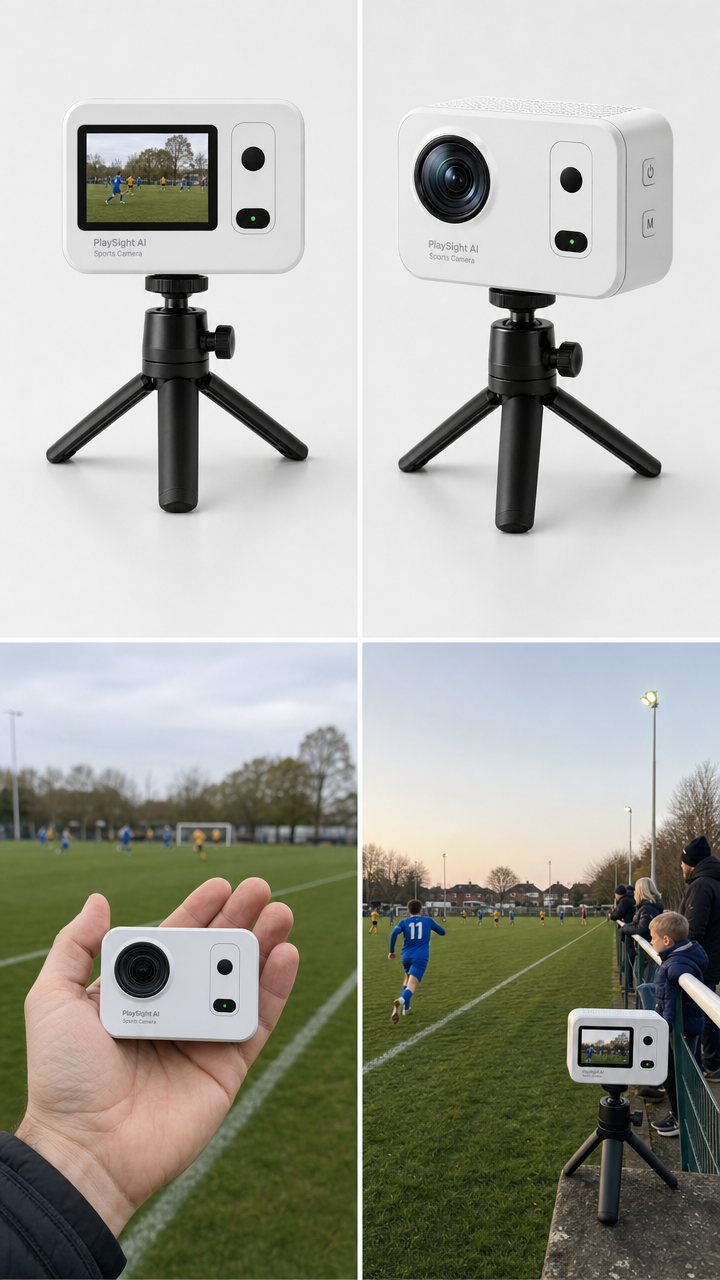
Prompt difficulty and tips: The biggest risk is product scale. If the prompt does not say this is a palm-sized action camera, the camera can become as large as a broadcast camera, too small to read, or out of proportion next to a hand, tripod, or football. Give an approximate size, such as about 7 cm wide, 5 cm tall, and 3 cm deep, and include a human hand holding it with a visible grass pitch background so the model has a clear scale anchor against both the hand and the environment.
Original product image
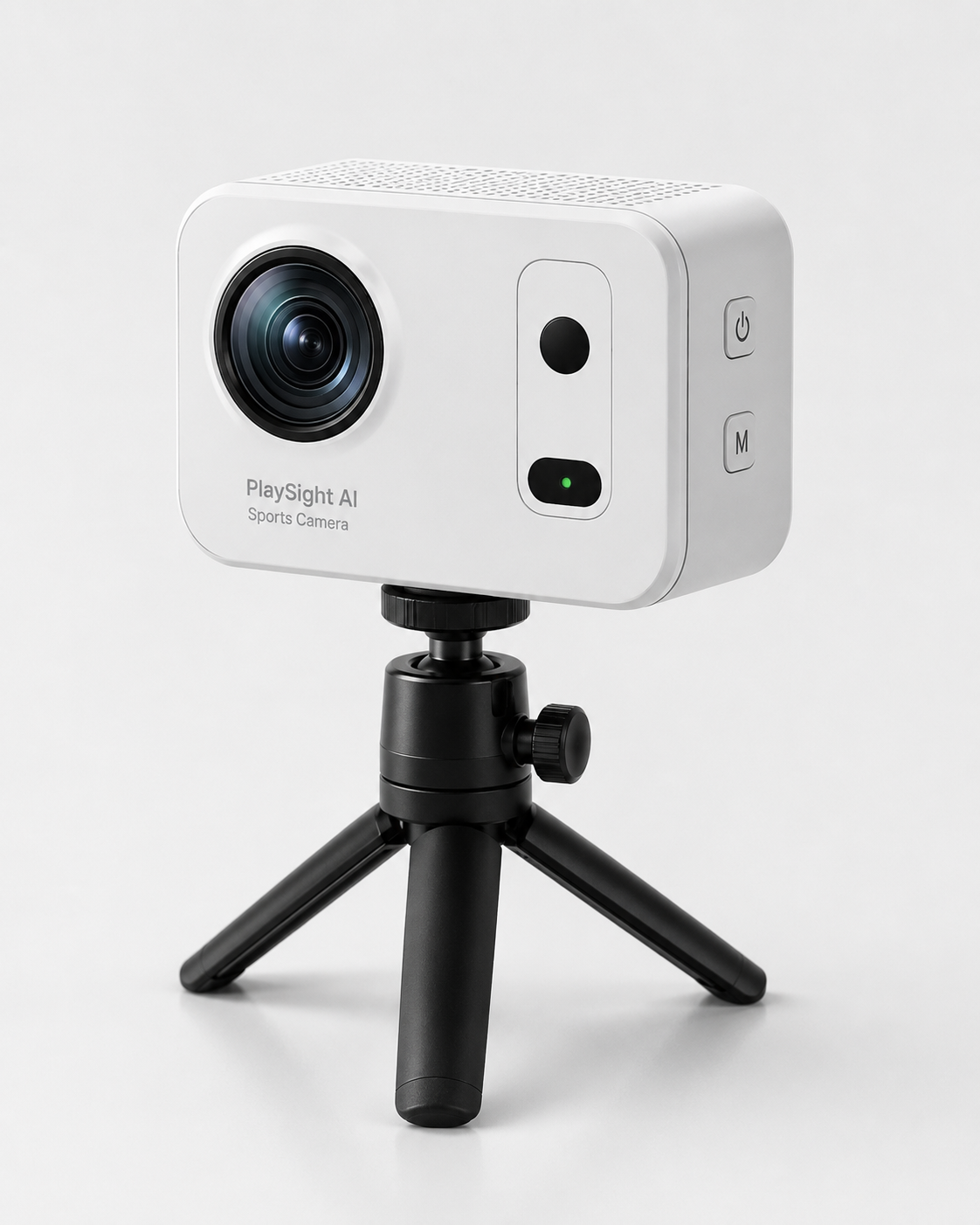
Image 2 reference board
Video result
Image prompt: product angle and pitch reference board
Use the uploaded AI sports camera product photo as the source image. Create a clean 2x2 four-panel reference board for a local football highlight ad. Top-left panel: a front hero shot of the camera, showing the screen side clearly, with the product centered and readable. Top-right panel: a side or 45-degree angle that shows the lens, tripod mount, buttons, sensors, and status light. Bottom-left panel: a realistic adult hand holding the camera at the edge of a green football pitch, with the grass, touchline, and a soft local-match background visible behind the hand; the camera should sit naturally in one palm, about 7 cm wide, 5 cm tall, and 3 cm deep, smaller than a smartphone and much smaller than a broadcast camera, with a believable size relationship between the hand, fingers, wrist, and camera body. Bottom-right panel: a natural local pitch action keyframe with a player sprinting down the wing, simple floodlights, parents near the touchline, and the same camera visible on a sideline tripod or near the edge of frame. Keep the exact camera body, screen, lens, tripod mount, buttons, sensors, status light, logo or label placement, color, and proportions. Do not redesign the camera, make it oversized, make it tiny, add fake product UI that covers the product, add real club marks, or make the local pitch look like a professional broadcast set.
Video prompt
Use the uploaded AI sports camera product photo and the Image 2 reference board as visual references. Create a 15-second cinematic ad showing how a local football match becomes a polished highlight reel. Keep the camera body, lens, tripod, and status light consistent.
0-3 seconds: Open on the camera placed on a sideline tripod at a local evening pitch. Real grass, simple floodlights, players in original non-branded kits, and parents near the touchline. The camera lens turns slightly and locks onto the ball. Add a subtle tracking beep.
3-7 seconds: Cut into the match. A player sprints down the wing. The camera movement follows the ball with smooth tracking, not a professional broadcast crane. Show footsteps, ball contact, breath, and a grounded local-game atmosphere.
7-10 seconds: A quick pass leads to a shot on goal. Keep the ball path, player limbs, goalkeeper movement, and impact clear. Avoid warped feet, floating bodies, or impossible ball movement.
10-13 seconds: The goalkeeper makes a save or the ball hits the net. Parents and teammates cheer. Add a subtle on-screen caption: “Auto-tracks every play.” Keep graphics minimal and realistic.
13-15 seconds: End with the sports camera in the foreground and the local pitch behind it. Add the CTA: “Your match. Your highlight.” No real teams, official logos, real player likenesses, broadcast graphics, or professional league branding.
Case 4: Match-Day Deodorant Ad - “Stay Fresh Under Pressure”
Deodorant gives the article a different product category. It is not another gadget, and it connects to football in a direct physical way: players sweat during drills, sprints, tackles, and late-match pressure.
The tone should be energetic but grounded. A good deodorant football ad should feel close to the body and close to the pitch: floodlights, breath, grass, jersey fabric, and the tension of a real football moment.
Why this product works
The best angle is not “become a champion.” That overpromises and drifts toward sports cliche. The better angle is everyday freshness and confidence during real football effort.
Use three environments: changing room before kickoff, sideline bench during the match, and a green pitch under local floodlights. These settings give the product a natural role and make the ad feel more athletic and less generic.
Recommended model: HappyHorse 1.0
HappyHorse 1.0 is the best fit for this case because the ad depends on synchronized sound as much as the image. The energy comes from small audio details: a product click, studs on turf, controlled breathing, jersey movement, crowd ambience, and a whistle under floodlights. HappyHorse is built around generating picture and sound together, which makes it a better match than a purely visual product spot.
Keep this version tight: 8 seconds, 9:16, built around effort and freshness on the pitch. Use the product photo as the reference and keep the claim focused on freshness and confidence. Avoid health, performance, or guaranteed-duration language unless the brand can prove it.
Personal care claims need extra review. Before publishing, check the label, product shape, wording, and any caption that could be read as a medical or performance promise.
Prompt for this case
Image model: Image 2
Video model: HappyHorse 1.0
Aspect ratio: 9:16 or 4:5
Inputs: Deodorant product image, local pitch scene, sideline bench scene
Prompt difficulty and tips: Personal care ads need careful claim control. The product should look like the uploaded bottle or package, but the scene should not suggest medical treatment, guaranteed sweat prevention, or body-performance claims. Show exertion in a sporty way, not a clinical way. Keep the bottle a believable handheld size, place it on a bench, in a hand, or beside gear, and keep captions around freshness, confidence, and pressure moments on the pitch.
Original product image
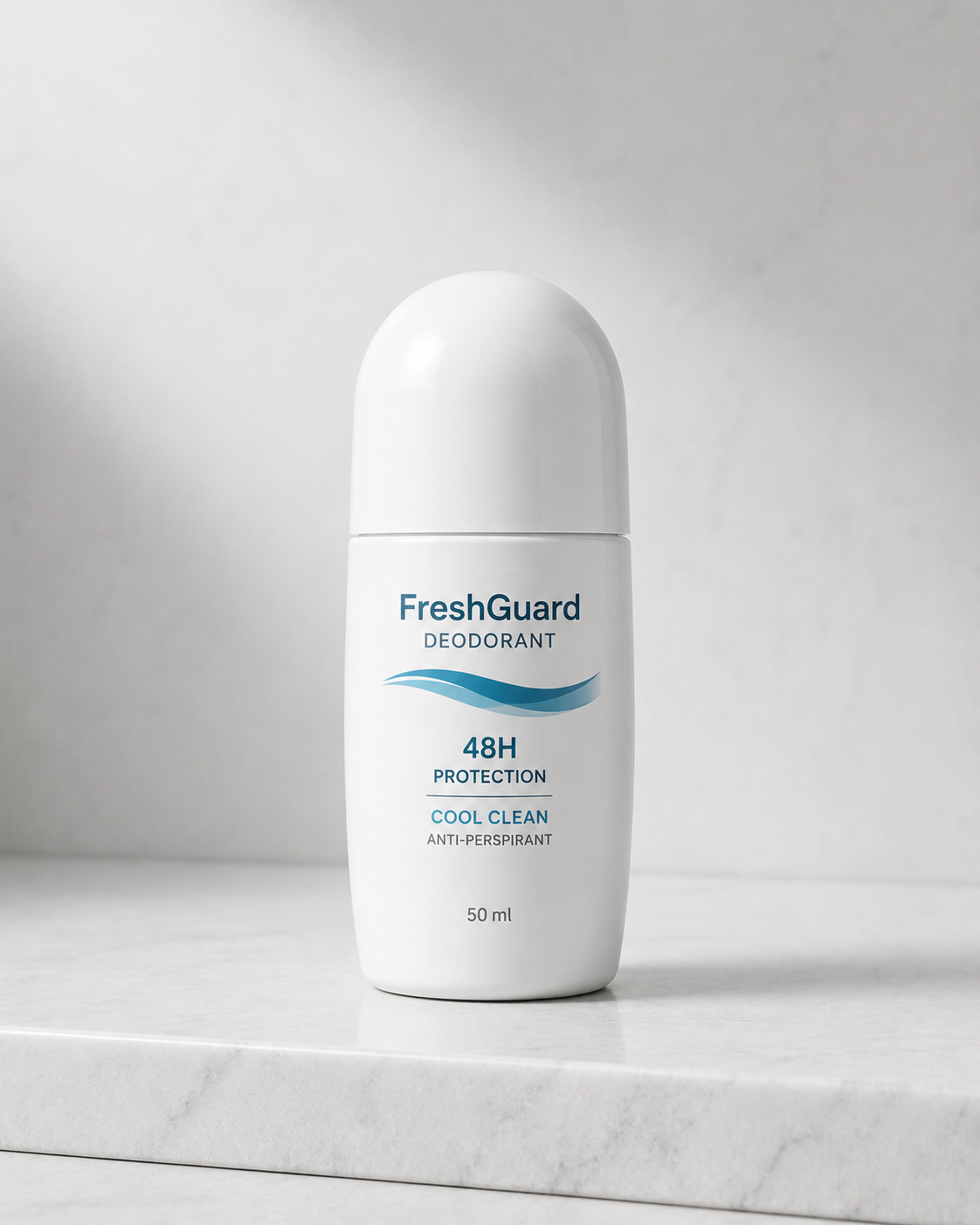
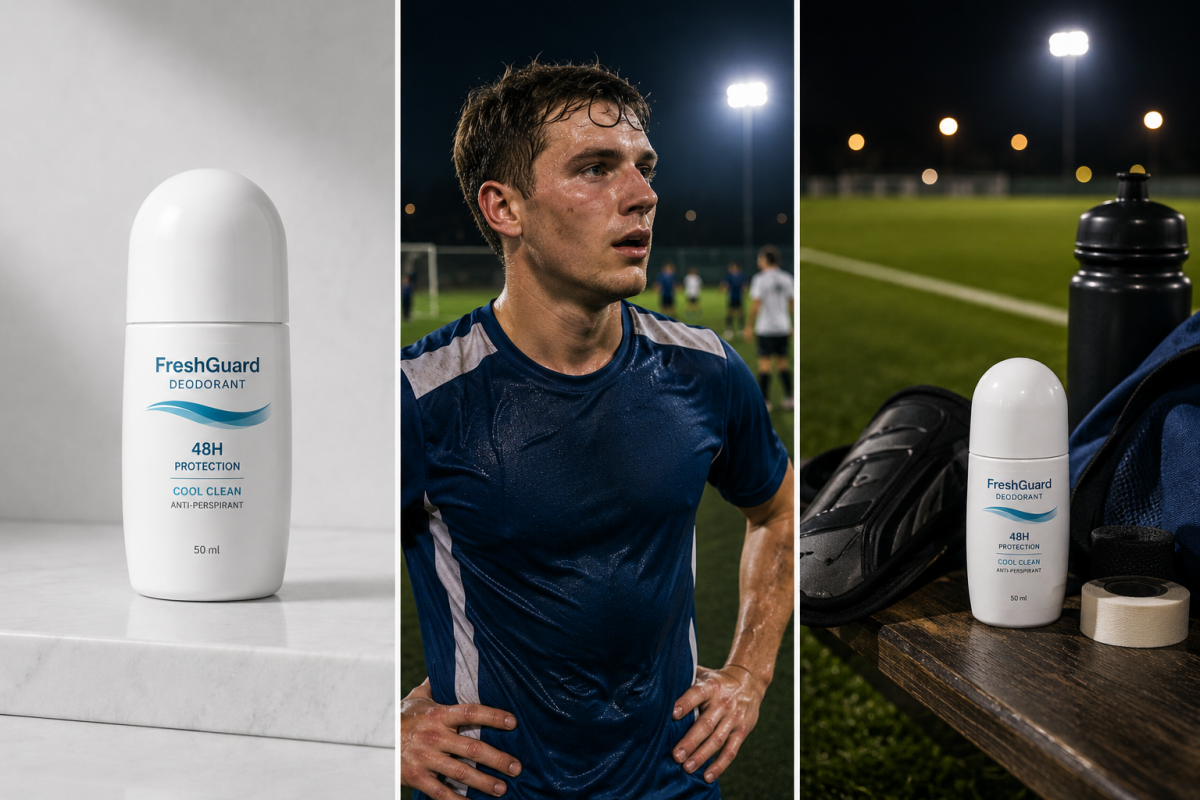
Image 2 reference board
Video result
Image prompt: product and on-pitch scene reference board
Use the uploaded deodorant bottle or packaging photo as the source image. Create a three-panel reference board for a football deodorant ad. Panel 1: a clean ecommerce hero shot with readable packaging, soft studio lighting, and natural shadows. Panel 2: an athletic player on a green local football pitch under floodlights, visibly sweaty after effort, with natural skin texture, damp hair, and jersey fabric detail; keep the scene sporty and realistic, not glamorous or clinical. Panel 3: the same deodorant placed on a sideline bench or kit bag beside shin guards, tape, or a water bottle, with grass and pitch lights visible in the background. Keep the exact bottle shape, cap, label layout, label text, colors, package proportions, and material finish. Do not invent new claims, change the label, add medical wording, use real team marks, or make the product resemble a protected brand.
Video prompt
Use the uploaded deodorant product photo and the Image 2 reference board as visual references. Create an 8-second vertical football deodorant ad with HappyHorse 1.0, built around synchronized audio, effort, and freshness on the pitch. Keep the bottle shape, cap, color, and label consistent. Keep claims general and avoid medical or guaranteed performance language.
0-2 seconds: Open in a changing room or at the sideline before play resumes. The deodorant bottle is picked up from a bench next to boots and tape. Audio: subtle product click, quiet room tone, fabric movement, distant whistle.
2-4 seconds: Cut to a green football pitch under local floodlights. Show an athlete sprinting, turning, or slowing after a hard run, with visible sweat, grass texture, and strong breath. Audio: studs on turf, controlled breathing, light crowd ambience.
4-6 seconds: Show close-ups of exertion: sweat on the temple, jersey movement, a hand wiping the forehead, and a quick product cutaway on the bench or in hand. Audio: breath, jersey rustle, a short pause before the next play.
6-7 seconds: The player resets with focus as play continues. Use a whistle, a few quick footsteps, and rising match energy. Do not show real players, teams, broadcast footage, official logos, or scoreboard graphics.
7-8 seconds: End on a clean product hero shot with blurred pitch lights and the CTA: “Stay fresh under pressure.” Audio: match ambience fades into a soft product sting. Keep the product claim focused on freshness and confidence.
Recommended Workflow for Each Football Ad Case
Keep the workflow simple. For most product ads, create the first version with Ad Master so the product, benefit, captions, and structure are clear. Then move to a specialized model only when the winning idea needs more cinematic control, motion, or sound design.
| Case | First workflow | Advanced option |
|---|---|---|
| Smart projector watch-party ad | Ad Master from product photo and selling points. | PixVerse V6 for a more cinematic room transformation. |
| AI translator earbuds chant ad | Ad Master for a quick product-first social ad. | Seedance 2.0 Standard when reference consistency and native audio matter. |
| AI sports camera local highlight ad | Ad Master for the product value proposition. | Kling O3 for moving-ball action, local-match motion, and product tracking. |
| Match-day deodorant pressure ad | Ad Master for product clarity and claims control. | HappyHorse 1.0 when synchronized sound carries the tension. |
| Format repurposing after approval | Generate the strongest original ratio first. | Video Expand for vertical, square, or widescreen versions without simple cropping. |
Export Sizes for Football Ads
Do not make one version and crop it everywhere. Football scenes often have a product in the foreground, fans around the edges, captions near the top, and action in the center. Each platform needs its own composition.
| Platform | Ratio | Best use |
|---|---|---|
| TikTok, Reels, Shorts | 9:16 | Hooks, fan POV, product reveal, fast CTA |
| YouTube pre-roll | 16:9 | Story-led ad, cinematic spot, product narrative |
| Meta feed | 1:1 or 4:5 | Product plus offer, compact benefit message |
| Website hero | 16:9 or 21:9 | Campaign landing page or brand film preview |
| Marketplace video | 1:1 or 16:9 | Product clarity over cinematic effects |
For paid social, generate or expand with the final placement in mind. A vertical ad needs the product and key text inside the center safe area. A widescreen ad can use more lateral motion and atmosphere. A square feed ad needs the product benefit to be readable without sound.
Rights and Brand Safety Checklist
Football ads are full of tempting shortcuts. Do not use them. The safer creative route is also usually more original.
Before publishing a football or World Cup-style AI ad, check the following:
- Do not use FIFA logos, official tournament marks, club crests, or national team badges unless you have permission.
- Do not use real player names, faces, voices, signatures, or distinctive likenesses without rights clearance.
- Do not copy real match footage, broadcast graphics, scoreboard designs, or commentary.
- Use fictional teams, generic stadiums, original jerseys, abstract flags, and invented fan groups.
- Keep product claims provable, especially for personal care, health, performance, audio translation, and electronics.
- Review platform rules for AI-generated or heavily AI-edited ad content before running paid campaigns.
- Add AI disclosures where the platform, region, client, or campaign policy requires them.
- Keep a record of source assets, product images, prompts, edits, and final approvals.
This last point matters. The Verge has reported how AI labels in social ads can become messy when advertisers, platforms, and disclosures do not line up. Treat transparency as part of ad ops, not as a last-minute caption.
How to Make AI Football Ads Look Less Generic
Generic football ads usually start with a stadium, cheering fans, and slow motion. A stronger ad starts with a product-specific football moment.
| Weak idea | Stronger idea |
|---|---|
| A bottle in a stadium. | A deodorant bottle on the sideline during a hard local match. |
| Fans cheering around a gadget. | A projector turns a small apartment into a match-night room. |
| A camera near a football pitch. | A parent turns a local match into a cinematic highlight reel. |
| Earbuds at a tournament. | A traveler understands a local chant for the first time. |
Use four checks before final render: the product must matter, the moment must feel specific to football, the first second must show a product or emotion, and a real fan should believe the ritual.
FAQ
What is the best AI football ad generator?
For product-first football ads, start with PixVerse Ad Master because it is built around product image, product name, selling points, captions, music, and ad structure. Use PixVerse V6, Seedance 2.0, Kling O3, or HappyHorse 1.0 when the ad needs more custom scene direction, reference control, action motion, or synchronized sound.
Can I make World Cup-style ads with AI?
Yes, but avoid official World Cup marks, FIFA logos, real teams, real players, broadcast footage, and protected scoreboard designs unless you have rights. Use fictional teams, original kits, and generic stadiums.
Which model should I use for a football product ad?
Use Ad Master for the first product ad version. Use PixVerse V6 for cinematic watch-party scenes, Seedance 2.0 for reference-heavy fan scenes with native audio, Kling O3 for sports action and product tracking, and HappyHorse 1.0 for short ads where synchronized sound is the main creative device.
Can AI generate football ads from a product photo?
Yes. Upload the product photo, add the product name and selling points, choose a football scene, and generate the first ad in the target ratio. Review the final video for product shape, label accuracy, claim safety, captions, audio, and rights limits before publishing.
What aspect ratio should I use for football video ads?
Use 9:16 for TikTok, Reels, and Shorts; 16:9 for YouTube and website players; 1:1 or 4:5 for feeds; and 21:9 for campaign hero videos.
Can I use real football teams or players in AI-generated ads?
Do not use real teams, player likenesses, names, voices, crests, national badges, or official event marks unless you have permission. Fictional teams and original fan culture are safer.
How do I make AI football ads look less generic?
Start with a real product use case, not a stadium prompt. Build around a watch party, local match, penalty shootout, street chant, or training session, and keep the product visible early.
Can I use AI-generated football ads for paid campaigns?
Yes, but review rights, claims, product accuracy, disclosure rules, and ad policies before launch. Paid campaigns need stricter review than organic posts.
What products work best for football-themed AI ads?
Products that belong in match-night, fan, training, or local-game moments work best: projectors, speakers, drinks, snacks, sports cameras, earbuds, deodorant, athletic gear, travel products, and fan accessories.
How should I test different AI video ad versions?
Change one variable at a time: hook, product close-up, CTA, voiceover, sound, ratio, or scene angle. For paid social, test several 9:16 openings first.
Conclusion
A strong AI football ad generator workflow starts with a believable product moment. Start with the product photo, product name, selling points, and one football ritual. Use Ad Master when you need a fast product-first ad, then move to V6, Seedance 2.0, Kling O3, or HappyHorse 1.0 only when the creative needs more scene control, reference consistency, action motion, or synchronized sound.
On pixverse.ai, creators can work with the workflows used in this guide from one platform: Ad Master for product-first ads, Image 2 for product photo polish, PixVerse V6 for cinematic social video, Seedance 2.0 for reference-heavy fan scenes, Kling O3 for sports action, HappyHorse 1.0 for audio-driven spots, and Video Expand for format repurposing. That makes the process easier to manage because the product image, generation, review, and resizing can stay in one place.
You can also browse mini apps for purpose-built creator workflows. Start with one product, one football ritual, one clear benefit, and one target ratio. Build the first version, review it like a real ad, then make the next cut sharper.