BACH AI Video Generator: From Clips to Directed Films
BACH AI Video Generator turns AI video from single clips into 30-second multi-shot films. Learn what makes it different, where it fits, and how to test it.

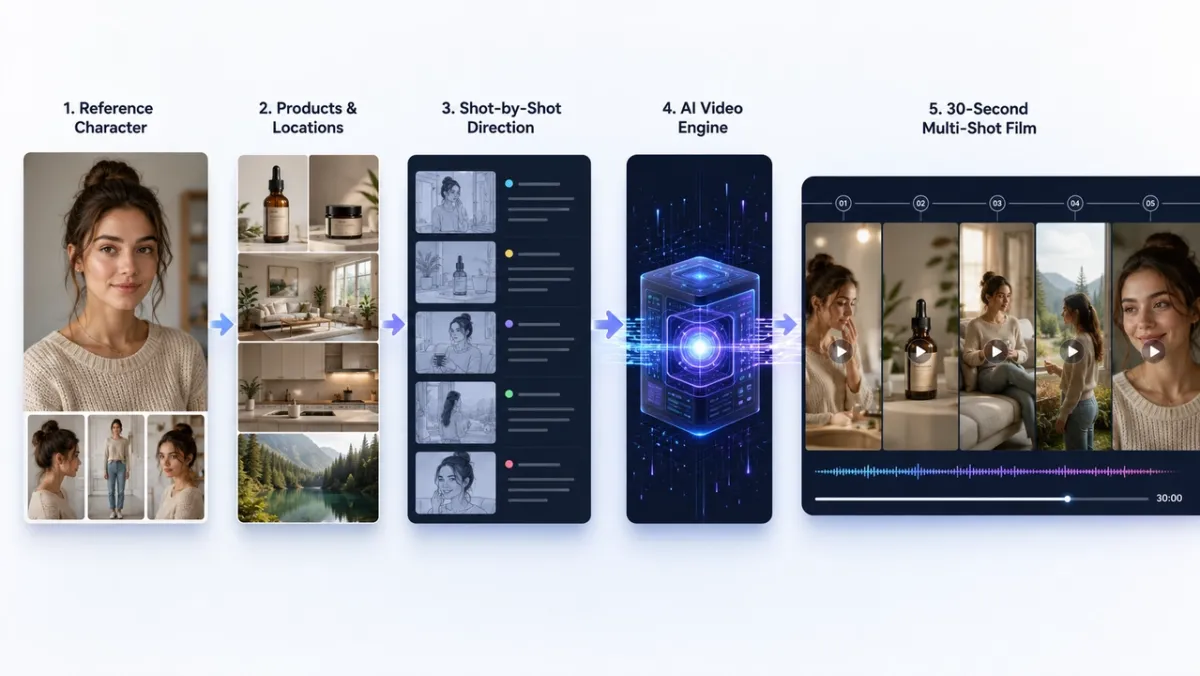
BACH AI Video Generator is not trying to be just another tool for making one beautiful AI video clip. Its more interesting promise is direction: give the system reference assets, locations, emotional beats, and shot-by-shot instructions, then ask it to produce a connected 30-second multi-shot film rather than a disconnected set of short clips.
That is the key difference. Most AI video generators are still optimized around a single moment: a cinematic shot, a product reveal, a character action, or a short visual loop. BACH, announced in Video Rebirth’s May 7, 2026 launch release, is positioned around continuity across a full sequence. The company says BACH can generate films up to 30 seconds long from reference images, location images, and shot-by-shot direction, while preserving character identity, performance, camera intent, and narrative flow.
For creators, marketers, and agencies, the question is not only “Can BACH make a better-looking clip?” The better question is “Can BACH reduce the work between a script and a reviewable short-form film?” That is why BACH matters: it moves the conversation from prompting a clip to directing a sequence.
What Makes BACH Different?
BACH’s most distinctive idea is that it treats AI video as a shot system, not only a clip generator. A normal AI video workflow often requires teams to generate separate clips, stitch them together, hide continuity errors, and accept weaker storytelling when a character, product, or location changes between shots. BACH is designed to reduce that gap by handling the sequence as one directed output.
| Most AI Video Tools | BACH’s Differentiator |
|---|---|
| Generate one short clip at a time | Generates up to a 30-second multi-shot film, according to Video Rebirth |
| Focus on one prompt and one scene | Uses reference characters, product or location images, and shot-by-shot direction |
| Can drift between clips | Positions character identity, emotion, camera language, and narrative flow as core controls |
| Often require manual stitching | Aims to produce a more reviewable sequence from the start |
| Best judged by visual quality | Should be judged by continuity, editability, product accuracy, and production usefulness |
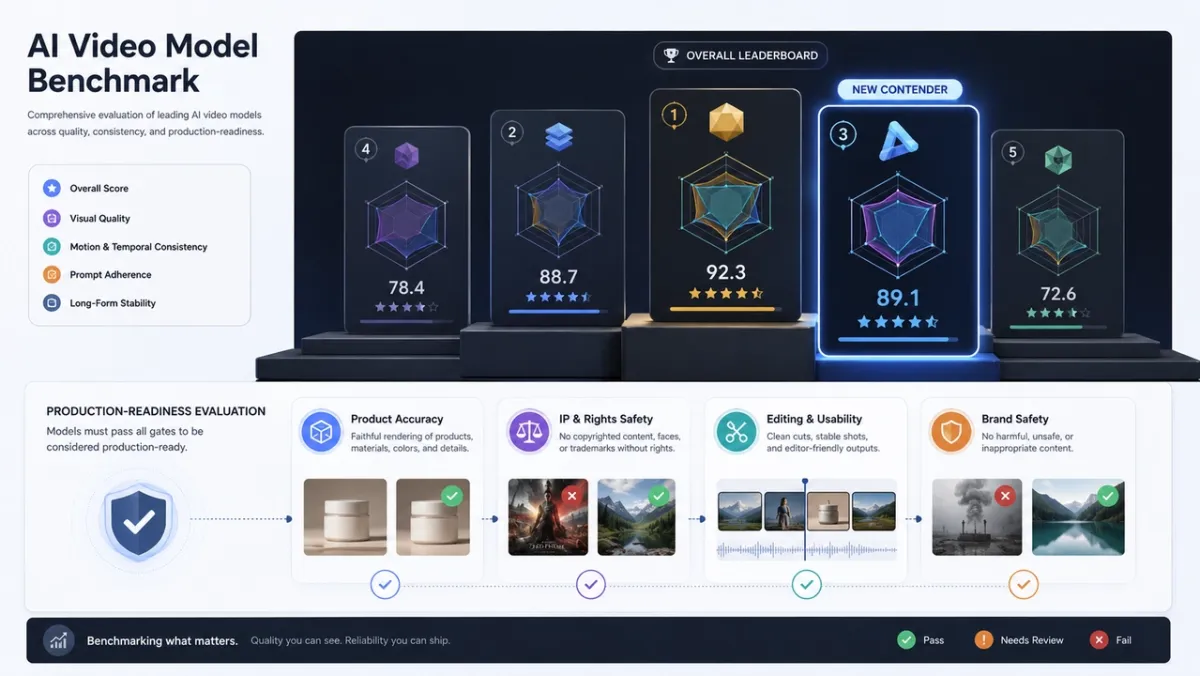
As of May 9, 2026, the Artificial Analysis Text to Video Leaderboard lists Bach-1.0 Preview at No. 6 in the No Audio ranking, with an Elo score of 1,227, a 95% confidence interval range of 4–12, and 3,659 samples. That is a strong early signal, but it is not proof of production readiness. Benchmarks do not measure brand safety, product accuracy, editing time, legal clearance, or ad performance.
Quick Facts
| Question | Short Answer |
|---|---|
| What is BACH? | A multi-shot AI video engine from Video Rebirth. |
| What launched? | Public access to BACH at bach.art, announced May 7, 2026. |
| What can it generate? | Video Rebirth says BACH can generate multi-shot films up to 30 seconds. |
| What inputs does it use? | Reference images, location images, and shot sequence descriptions. |
| What is the main promise? | Character consistency, emotional performance, camera language, and narrative structure in one workflow. |
| What is independently visible? | Artificial Analysis currently ranks Bach-1.0 Preview No. 6 on the No Audio Text to Video leaderboard. |
| What remains unclear? | Public pricing, API details, real-world production reliability, and rights handling. |
What Is BACH AI Video Generator?
BACH AI Video Generator is a multi-shot video engine developed by Video Rebirth. According to the BACH official website, the product is built around consistent characters, cinematic camera language, native 1080p output, and production-oriented video generation. According to the launch announcement, BACH can turn reference images and shot descriptions into a multi-shot film of up to 30 seconds.
The important term is multi-shot. A single-shot video model can generate one continuous clip. A multi-shot video model must handle cuts, camera changes, emotional shifts, object continuity, and story progression. That is a much harder production problem.
For marketers, this distinction is practical. A short ad is rarely one continuous visual. It usually has a hook, a problem, a product reveal, a usage moment, a benefit, proof, and a call to action. BACH is designed around that structure.
Why Multi-Shot Matters for AI Video
The first stage of AI video was about visual surprise: Can the model generate something cinematic, surreal, realistic, or shareable? The next stage is about production usefulness: Can the model carry a brief through multiple shots without breaking the story?
BACH is interesting because it targets what we would call continuity debt.
Continuity debt is the hidden work created when an AI video looks good in one clip but fails across a sequence. The team then has to regenerate shots, patch edits, hide artifacts, rewrite the script, avoid close-ups, or accept a weaker story. That debt is why many beautiful AI video demos do not become campaign assets.
For a marketing team, the real metric is not whether BACH can make a nice frame. The real metric is whether it reduces:
- Regeneration count.
- Manual stitching between clips.
- Character drift.
- Product deformation.
- Shot-to-shot logic errors.
- Time from script to reviewable draft.
That is the strategic reason BACH deserves coverage now. It sits at the center of a broader shift from clip generation to shot-system generation.
What Video Rebirth Claims BACH Can Do
Video Rebirth describes BACH as an industrial-grade video engine built around four dimensions: character identity, emotional performance, camera language, and narrative structure. The company’s broader Video Rebirth technology page also frames BACH around Physics-Native Attention, Dual DiT, and Multi-Step Sampling Loss.
Generate Multi-Shot Films Up to 30 Seconds
The launch announcement says BACH’s Montage feature lets users upload reference photos and location images, describe a shot sequence, and generate a multi-shot film up to 30 seconds.
This duration matters because 30 seconds is a real advertising unit. Many product explainers, paid social ads, short drama teasers, and pitch videos live in the 15- to 30-second range. A model that can hold a sequence for that long may be more useful than a model that creates isolated 5-second fragments.
Hold Character Identity Across Shots
Video Rebirth says BACH uses Physics-Native Attention (PNA) to preserve character identity through bone structure, skin tone, proportional relationships, and expression dynamics. The Video Rebirth About page describes this as part of its “industrial-grade” video generation standard.
The practical test is simple: if the same actor appears in seven shots, does the audience still believe it is the same person? Character identity is not only a face problem. It includes age, body shape, posture, clothing, expression, and how the person moves.
Direct Emotional Performance
The company says BACH can execute distinct emotional states per shot. That matters because short-form ads are often emotional compression machines: anxiety before the product, relief after the product, confidence at the end.
If emotional control works, BACH could be useful for direct-response ads, short drama hooks, founder videos, and product stories where the viewer needs to understand a feeling in seconds.
Understand Camera Language
Video Rebirth says BACH’s Dual Diffusion Transformer (DDiT) architecture interprets production language such as whip pans, rack focus, camera motion, lighting setups, and visual style.
That is important because production teams do not think only in prompts. They think in shots: close-up, over-the-shoulder, push-in, product insert, reaction shot, reveal, transition, end card. A tool that accepts this language is easier to fit into a creative workflow.
Generate Native 1080p and Audio in One Workflow
Video Rebirth says BACH generates native 1080p output and can create sound effects, voiceover, and background music alongside the video.
This is useful for review because stakeholders often judge a draft differently when sound, pacing, and image are together. It does not remove the need for audio clearance, voice approval, localization review, or platform compliance checks.
Evidence Map: Fact, Claim, or Interpretation
For a fast-moving product launch, it helps to separate what is known from what still needs testing.
| Statement | Status | Source Type | What It Means |
|---|---|---|---|
| BACH was announced on May 7, 2026. | Confirmed | PRNewswire / Video Rebirth | Launch timing is clear. |
| BACH is available at bach.art. | Confirmed | Video Rebirth launch release and BACH site | Public access is part of the launch story. |
| BACH can generate up to 30-second multi-shot films. | Vendor claim | Video Rebirth | Should be tested with real briefs before publishing strong conclusions. |
| BACH uses PNA for character consistency. | Vendor claim | Video Rebirth | Useful positioning, but not independently validated in public technical detail. |
| BACH uses DDiT for camera and direction control. | Vendor claim | Video Rebirth | Treat as product architecture claim. |
| Bach-1.0 Preview ranks No. 6 on Artificial Analysis No Audio leaderboard. | Third-party benchmark snapshot | Artificial Analysis | Strong comparative signal as of May 9, 2026. |
| BACH is ready for finished commercial ads. | Not proven | Requires user testing | Production readiness depends on brand, legal, output quality, and editability. |
Benchmark Context: How Strong Is BACH?
Artificial Analysis provides one of the more useful public comparison layers for video models. Its video generation benchmarking methodology says it tracks video generation quality through user preference comparisons and reports relative Elo-style scores using Bradley-Terry Maximum Likelihood Estimation. It also separates audio and no-audio modalities, which matters because a silent video output should not be compared directly with synchronized audio output.
As of May 9, 2026, the Artificial Analysis Text to Video Leaderboard (No Audio) shows:
| Model | Creator | Rank | Elo | 95% CI | Samples | Released | API Pricing |
|---|---|---|---|---|---|---|---|
| HappyHorse-1.0 | Alibaba-ATH | 1 | 1,355 | -10/+10 | 8,343 | Apr 2026 | $14.40/min |
| Dreamina Seedance 2.0 720p | ByteDance Seed | 2 | 1,272 | -8/+8 | 8,665 | Mar 2026 | No API available |
| Kling 3.0 1080p (Pro) | KlingAI | 3 | 1,250 | -9/+9 | 5,804 | Feb 2026 | $13.44/min |
| Kling 3.0 Omni 1080p (Pro) | KlingAI | 4 | 1,234 | -9/+9 | 5,226 | Feb 2026 | $13.44/min |
| grok-imagine-video | xAI | 5 | 1,233 | -8/+8 | 6,198 | Jan 2026 | $4.20/min |
| Bach-1.0 Preview | Video Rebirth | 6 | 1,227 | -10/+10 | 3,659 | Apr 2026 | Coming soon |
This is a credible debut because BACH appears near established models. But the benchmark does not answer every business question.
It does not measure whether a logo stays accurate. It does not measure whether a product claim is legally safe. It does not measure whether the output can be edited into a real campaign. It does not measure conversion rate, click-through rate, watch time, or brand recall.
The right conclusion is narrow: BACH has a strong early quality signal in a public preference benchmark. The rest must be tested in production-like conditions.
BACH vs Kling vs Runway
The best comparison is not “which model is best?” The better question is “which model fits the job?”
Quick Comparison
| Dimension | BACH | Kling 3.0 Omni | Runway Gen-4.5 |
|---|---|---|---|
| Core angle | 30-second multi-shot films with directorial control | Multimodal input, native audio, multi-shot narratives, element consistency | High visual fidelity, motion quality, prompt adherence, mature creative ecosystem |
| Official release context | Video Rebirth announced BACH on May 7, 2026 | Kling VIDEO 3.0 Omni guide published Feb. 6, 2026 | Runway introduced Gen-4.5 on Dec. 1, 2025 |
| Duration positioning | Up to 30 seconds, according to Video Rebirth | Up to 15 seconds, according to Kling’s 3.0 Omni guide | Depends on Runway product mode and plan |
| Audio positioning | Video Rebirth claims SFX, VO, and BGM in one workflow | Kling highlights native audio-visual output | Runway has broader video and audio tooling across its product ecosystem |
| Benchmark snapshot | Bach-1.0 Preview is No. 6 on Artificial Analysis No Audio leaderboard | Kling 3.0 Omni 1080p (Pro) is No. 4 | Runway Gen-4.5 is an important creative reference, but not currently above BACH in the cited No Audio snapshot |
| Best first test | 30-second ad prototype with 6–7 shots | 15-second multi-shot scene with native audio | High-polish visual concept inside an existing Runway workflow |
BACH vs Kling
BACH’s headline advantage is the 30-second multi-shot claim. The Kling VIDEO 3.0 Omni Model User Guide highlights all-in-one multimodal input, voice-driven characters, direct audio-visual output, storyboarding, native audio, element consistency, and 15-second generation.
For marketers, Kling is the stronger known baseline. BACH is the more interesting new challenger if the campaign needs a longer complete sequence. A fair test would use the same ad script, same character reference, same product image, and same scoring rubric. PixVerse users can already access Kling 3.0 Omni directly on the platform.
BACH vs Runway
Runway Gen-4.5 is positioned around motion quality, prompt adherence, visual fidelity, and creative control in Runway’s Gen-4.5 announcement. Runway also benefits from a mature creator ecosystem, which matters for teams that already build inside Runway.
BACH’s differentiation is narrower and sharper: it is making a direct claim around multi-shot 30-second output and production-style direction. If your team already uses Runway, the question is not whether BACH is more exciting. The question is whether it creates a reviewable sequence faster than your existing workflow.
Who Should Use BACH?
Marketing and Growth Teams
BACH is most relevant for teams that need fast ad prototypes. Use it for concept testing, hook testing, product storyboards, and internal creative review. Do not treat the first output as final media.
E-commerce Brands
E-commerce teams should test BACH on product reveal, usage demo, before-and-after, and offer videos. The main risk is product deformation. Packaging, labels, logos, device screens, and hand interactions should be checked frame by frame.
Agencies
Agencies can use BACH to turn scripts into reviewable visual drafts before production. The value is speed in client alignment: fewer mood boards, clearer direction, faster feedback.
Short Drama and Entertainment Teams
Short drama teams can test character dynamics, emotional hooks, and scene rhythm. BACH’s emotional performance positioning is especially relevant for romance, suspense, conflict, and transformation beats.
Game and Virtual World Teams
Video Rebirth’s broader site talks about immersive worlds, interactive world models, and real-time rendering. That makes BACH interesting beyond ads. Game teams may use it for previsualization, cinematic cutscene concepts, and environment mood tests.
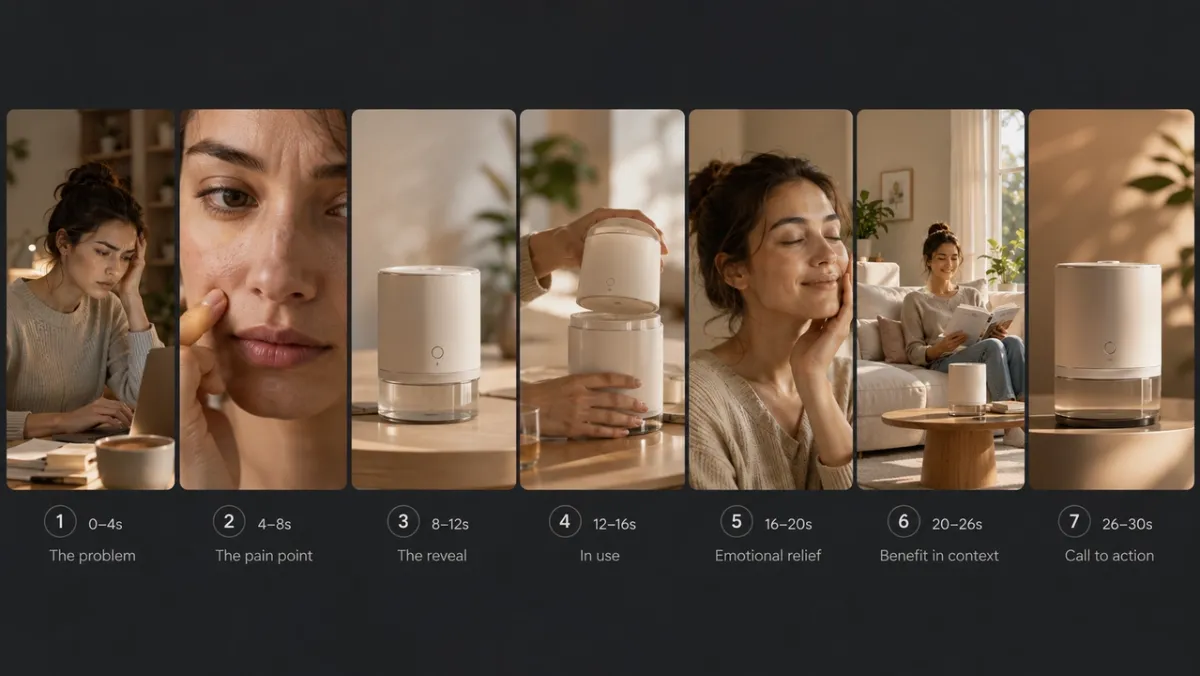
The 30-Second Ad Stress Test
If you want to evaluate BACH, do not start with a random cinematic prompt. Start with a production-style brief that creates pressure on the model.
Use a simple product ad:
| Shot | Duration | Creative Beat | What It Tests |
|---|---|---|---|
| 1 | 3 sec | Hook: the main character faces a visible problem | Face identity, emotional clarity, opening context |
| 2 | 4 sec | Close-up of the pain point | Hand motion, object behavior, scene realism |
| 3 | 5 sec | Product reveal | Logo stability, packaging accuracy, camera focus |
| 4 | 6 sec | Product use | Object permanence, hands, physical interaction |
| 5 | 5 sec | Transformation moment | Emotional progression, lighting continuity |
| 6 | 4 sec | Benefit proof | Secondary detail, environment consistency |
| 7 | 3 sec | CTA and end card | Text readability, brand safety, audio finish |
The output passes only if the asset is useful after review, not just visually impressive.
Test Prompt Template
Create a 30-second vertical product ad for [product].

Use the uploaded portrait as the same main character in every shot.
Use the uploaded product image as the product reference. Keep the shape, color, logo, label, and packaging consistent.

Tone: realistic, modern, clean, practical.
Visual style: premium social ad, natural lighting, no surreal effects.
Audio: subtle background music, light product sound effects, clear English voiceover.

Shot 1, 3 seconds: medium close-up of the character struggling with [problem].
Shot 2, 4 seconds: close-up of the problem; handheld camera, realistic motion.
Shot 3, 5 seconds: product appears on a clean table; slow push-in, readable packaging.
Shot 4, 6 seconds: character uses the product; show hands and product interaction clearly.
Shot 5, 5 seconds: character feels relief; warmer light, stable face identity.
Shot 6, 4 seconds: show the main benefit in context; move focus from product to reaction.
Shot 7, 3 seconds: final brand frame with the product centered and CTA: [CTA].

Avoid: changing face, warped product, unreadable text, logo mutation, extra fingers, broken hands, random background changes, unrealistic physics.
This template creates a better test because it asks BACH to preserve identity, product detail, camera logic, emotional continuity, and business intent at the same time.
Production Readiness Checklist
Score each item from 1 to 5. Treat product accuracy, rights, and brand safety as veto items.
| Criterion | What Good Looks Like | Why It Matters |
|---|---|---|
| Character identity | Same person across angles, emotions, and lighting | Prevents viewer distraction and trust loss |
| Product accuracy | Shape, logo, label, UI, and packaging stay stable | Required for commercial use |
| Shot grammar | Each cut supports the story | Makes the asset feel directed, not stitched |
| Emotional continuity | Performance changes match the script | Helps the ad communicate quickly |
| Physical plausibility | Hands, objects, fabric, and motion behave naturally | Reduces uncanny artifacts |
| Audio fit | Voice, music, and SFX support the scene | Makes the draft easier to evaluate |
| Editability | The output can be trimmed, captioned, and approved | Determines real workflow value |
| Legal safety | Rights, likeness, claims, and music can be cleared | Prevents publish blockers |
| Business usefulness | The output saves time or improves decisions | Separates demos from production tools |
The most important metric is not average quality. It is whether BACH reduces the number of steps between script and stakeholder approval.
Risks and Open Questions
Vendor Claims Need Independent Testing
The detailed claims about PNA, DDiT, native 1080p, and audio workflow come from Video Rebirth. They may be accurate, but teams should test them with their own assets before publishing strong conclusions.
The Benchmark Is No Audio
BACH’s launch story includes sound effects, voiceover, and background music. The cited Artificial Analysis snapshot is the No Audio Text to Video leaderboard. That means the benchmark supports visual quality comparison, not the full audio-video workflow.
Public Pricing Is Still Unclear
Artificial Analysis lists BACH API pricing as “Coming soon” as of May 9, 2026. Video Rebirth mentions enterprise API integration and custom IP-safeguarded environments in its launch release, but standard public pricing is not yet as clear as some competitors.
Rights and Compliance Still Matter
Reference images, generated likenesses, voiceover, background music, product packaging, logos, and location likeness can all create review needs. Teams should prepare a rights checklist before using BACH in paid media.
Duration Does Not Equal Production Readiness
Length is only useful if continuity holds. A 30-second video with product drift, face changes, unreadable labels, or weak transitions may require more editing than a set of shorter controlled clips.
How BACH Fits in the AI Video Landscape
BACH entering the market at No. 6 on the Artificial Analysis leaderboard shows how quickly the AI video space is evolving. For creators and marketers evaluating tools, the key insight is not about picking a single winner — it is about having access to the right model for each job.
On PixVerse, users already have access to a wide range of video generation models — from PixVerse V6 for versatile text-to-video generation, to the cinematic C1 model for film-quality output, to Seedance 2.0 and HappyHorse 1.0 for specialized workflows. PixVerse also offers character consistency tools, native audio generation, and image-to-video pipelines — all in one workspace.
Whether you are testing BACH for multi-shot ads or comparing it against existing tools in your pipeline, having multiple model options on a single platform means you can match the model to the brief instead of the other way around.
Frequently Asked Questions
What is BACH AI Video Generator?
BACH AI Video Generator is Video Rebirth’s multi-shot video engine for generating short films up to 30 seconds. It uses reference images, location images, and shot-sequence instructions to control character identity, camera movement, emotional performance, and narrative flow.
Is BACH a text-to-video tool?
BACH includes text direction, but it is better described as a reference-guided multi-shot video engine. Video Rebirth says users can upload reference photos and location images, then describe a shot sequence for the model to generate.
How long can BACH generate video?
Video Rebirth says BACH can generate multi-shot films up to 30 seconds. That length is especially relevant for short-form ads, product demos, social videos, pitch scenes, and short drama concepts.
Why is multi-shot generation important?
Multi-shot generation matters because commercial video usually needs more than one clip. It needs continuity across character, product, scene, emotion, camera movement, and story. That is where many single-clip generators create extra editing work.
How does BACH compare with Kling 3.0?
BACH is positioned around 30-second multi-shot films and directorial control. Kling 3.0 Omni is positioned around multimodal input, native audio-visual output, element consistency, storyboarding, and 15-second generation. Test both with the same brief to judge workflow fit.
How does BACH compare with Runway Gen-4.5?
Runway Gen-4.5 is a notable model for visual fidelity, motion quality, prompt adherence, and creative control. BACH is newer and more focused on 30-second multi-shot generation. Existing Runway users should compare BACH against their current workflow, not only against benchmark rank.
Is BACH ready for paid ads?
BACH may be useful for ad prototypes and creative testing, but final paid ads still need review for product accuracy, rights, claims, audio licensing, brand safety, platform policy, and editability.
What is the best way to test BACH?
Use a structured 30-second ad brief with a reference character, reference product, 6–7 shots, defined emotions, camera instructions, audio requirements, and a CTA. Then score the output on continuity, product accuracy, shot grammar, legal safety, and time saved.